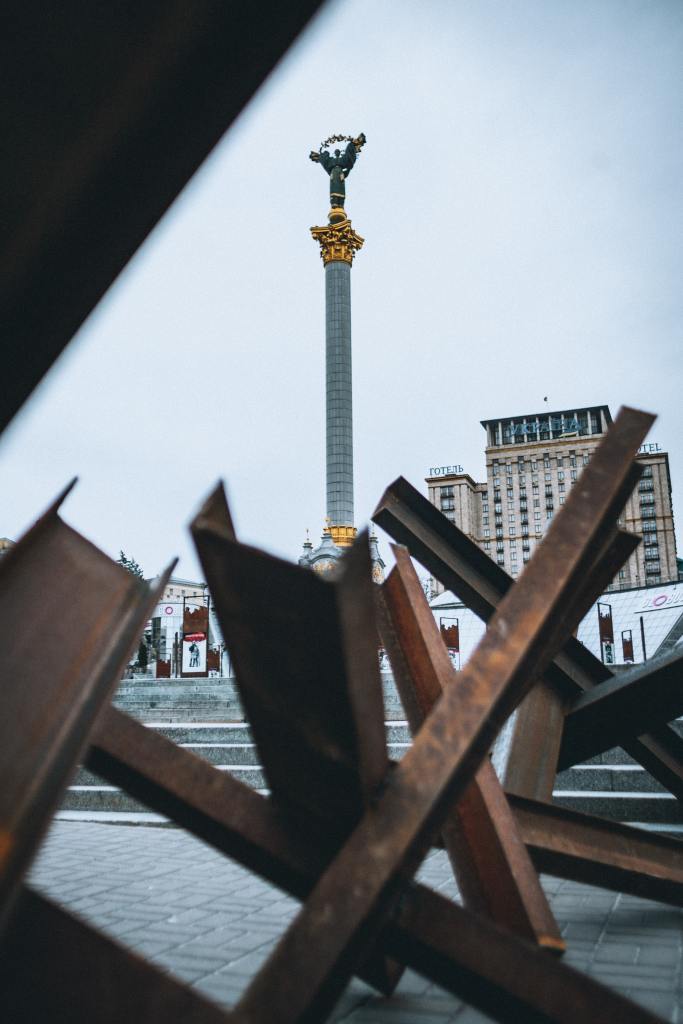
Putin’s May 9th Parade is a factor why Russia will lose in Ukraine

Since the Soviet victory over Nazi Germany in 1945, May 9th has had a special place in Russian hearts. Just like with the U.S. and Western Europe’s victory in World War II, the victory over Nazi Germany was a spectacular achievement. Since that year the Soviet Union and now Russia have used the May 9th parade to showcase Russian military might. It has had a twofold purpose. The first is demonstrate to the world Russian military might and technological prowess. From Stalin to Khrushchev and Brezhnev, the Mayday parade was a direct threat to Western powers. The second reason was to keep the Russian populace in check. Among other celebrations and events, it reminds the Russian people that they are aways in danger of being invaded. And if any dissidents had nefarious thoughts, the mighty Russian military would quash them. Vladimir Putin has certainly used May 9th in the same way as his Soviet predecessors.

But this May 9th, 2022 has taken new significance for Russia. Not since their invasion of Afghanistan 1979 has May 9th had such implications. Russia’s disastrous invasion of Afghanistan was partially responsible for the collapse of the Soviet Union. No one remembers that more than a then mid-level KGB officer. He literally lost his advancement and livelihood along with millions of Russians. The May 9th parade, among so many other things, lost it’s punch. The Chechan wars, Georgia (South Ossetia), Syria, Crimea and Donbass illustrated the both shortcomings and victories of the Russian military.

2022 has certainly been a different year for Russia. Beset by failures in their invasion of Ukraine, NATO was concerned that Putin would try extreme measures to achieve some level of success by May 9th. The Russian military did step up their military operations and bombardments but as of writing no extreme measures nor reserve/conscript call-ups have occurred. Putin tried to put a brave face by parading his army and blaming the West for Russia’s ills. But the fact that Putin held a parade is exactly why he has nothing to celebrate.

To understand, let’s go back a bit. The 1967 Arab-Israeli war saw Israel pummel the Egyptian army and take the Sinai Peninsula. Several Egyptian Generals realized that they lost because of their emphasis on military parades. While Israel’s forces trained for combat, Egyptian forces practiced months for military parades. As impressive as they were, these parades had the opposite effect than intended. The Egyptian military spent money on uniforms, equipment and fuel to get soldiers and vehicles moving in lock step. But that sapped their resources and training for actual fighting. Thus, in 1967, the outnumbered Israeli Defense Forces won the day. In preparations for the 1973 Yom Kippur war the Egyptians correctly ditched formalities and focused on training and equipping for war. Their initial gains were spectacular and if not for the Egyptian high brass dismissing their top general to push too far ahead Israel may not have survived.

And that is the paradox that Vladimir Putin faces. He needs the parade to project Russian military power to the world. And it keeps the Russian people sufficiently cowed to avoid a coup d’etat. But, it prevents his army from actually preparing for war. In the middle of a war they are losing. It looks impressive to show ranks of stout Russian soldiers and nuclear capable mobile missile launchers. But, it does little to actually help Russia win their faltering invasion of Ukraine. Will Putin change course. Probably not. He is stuck both needing to keep and to eliminate the May 9th parade. There are numerous other factors that will determine the fate of Ukraine and Russia. How the Russian military’s penchant for pomp and circumstance influences the outcome will be a point of interest.
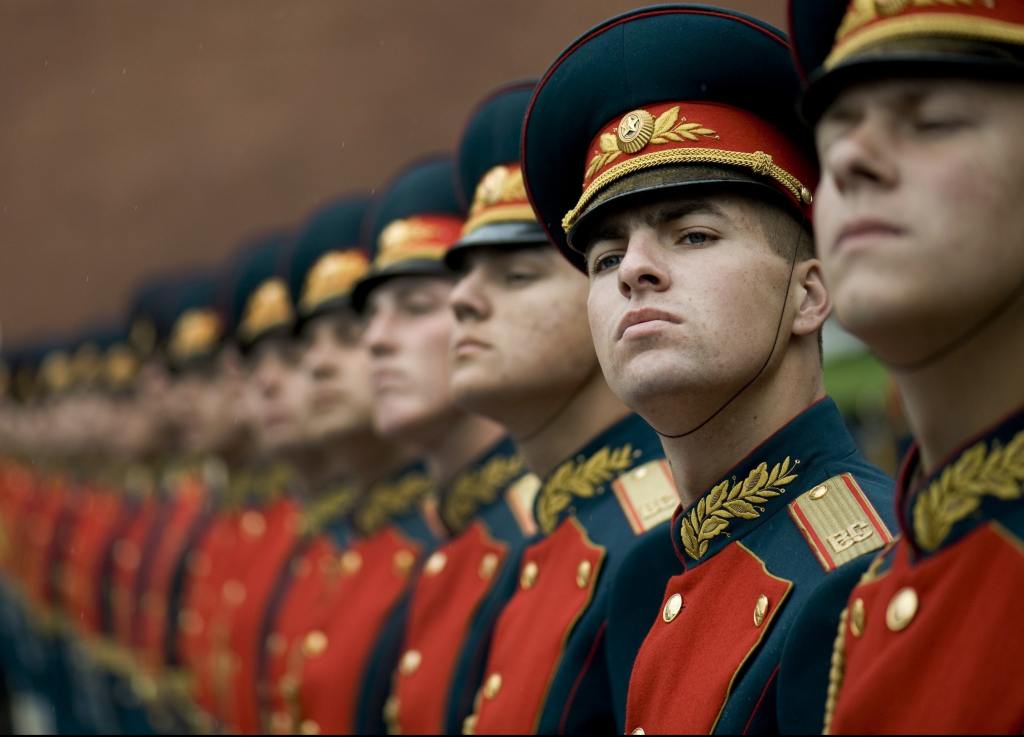
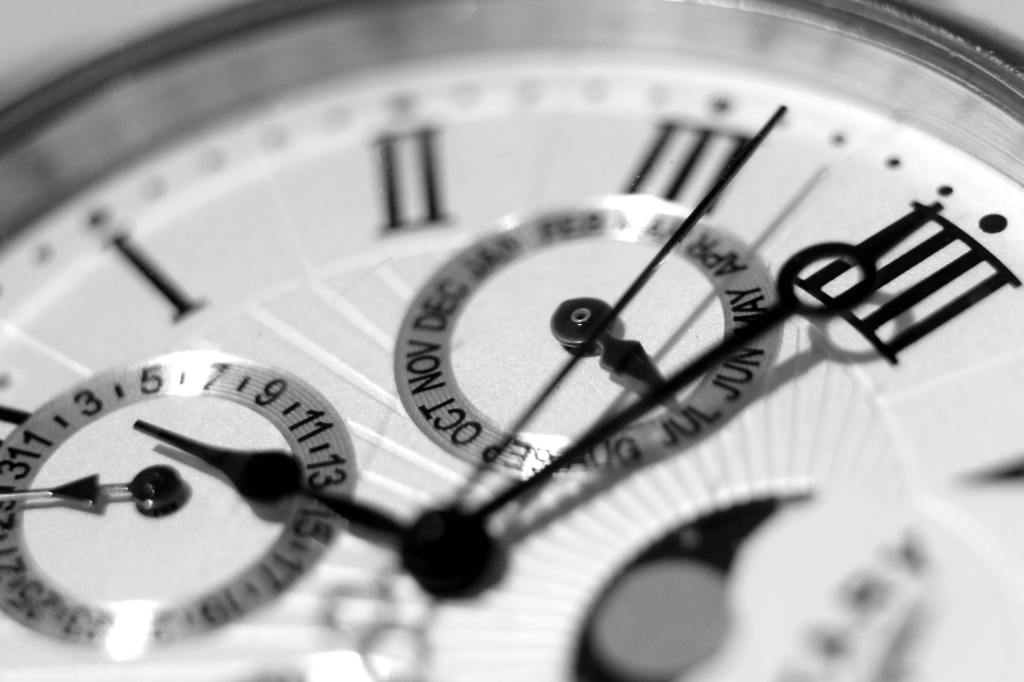
Putin is losing to Father Time

There are several reasons why Vladimir Putin decided to invade Ukraine this year. One potential reason that has received little attention is his age. Vladimir reaches seventy years old this year. At this life stage most persons are looking forward to retirement or seeing their grandchildren. Now, being President of a major economy at that age is not unheard of. Joe Biden is seventy nine and Donald Trump seventy five. People who continue working at this age usually are driven personalities that retirement would be a detriment. So why would age influence Putin’s current decisions?

To answer that question there are two questions first to pose. First, what is Putin’s professional background. It is well known Putin was a mid-level KGB officer at the time of the fall of the Soviet Union in 1991. He was based in communist East Germany and likely felt a rising star (we assume) in the world’s most vaunted secret service only to see it all fall apart. The KGB was dissolved as the Soviet Union collapsed leading to the economic chaos of the 1990s. Like many Russians, Putin’s life was upended. He even admitted he drove a taxi to make ends meet.

The second question would be: what has Putin accomplished in his twenty two years in power. On the one hand Putin is known for stabilizing Russia’s economy after the chaos of the 1990’s. Putin also restored some of Russia’s former glory. He created a new security pact with the Caucus States similar to the old Warsaw Pact. And he did take Crimea, parts of Donbass and South Ossetia along with suppressing Chechnya independence. But externally, Russia has lost major ground against the West. Not only have many former Warsaw Pact countries joined NATO (Poland, Estonia, Latvia, etc.) they have also become successful economies under the European Economic Union. Essentially, they have become beacons of light for countries such as pre-war Ukraine that joining the EU and NATO are beneficial vs. aligning with Russia. And the Caucus states and Russia have for the most part stagnated. There is immense natural resource wealth such as oil, gas, coal and precious metals, but industry and living standards continue to lag. Coupled with a rumored failure to address the Covid-19 pandemic has left Russia a weakened and ignored state.

Merging both answers we see that Putin could be facing an end of life crisis. He is still relatively young, but he only has a decade or two left in power. It’s probably crunch time for Putin to remake Russia’s former glory. It will be hard given it’s stagnant economy and that since Russia’s 2014 taking of Crimea the West is alerted to Putin’s nefarious intentions. All the more so his age could factor into his decision making. How many other authoritarian powers have seen their dreams vaporized and coup d’etats occur in their eighties. Could it be that Putin needs to move now or he will never remake the glory that was once the Soviet Union.

Neutrality will not work for most countries under Russia’s Invasion of Ukraine

With Russia’s invasion of Ukraine there have been heralds of the resumption of the Cold War of the 20th century. It certainly appears that way as the West (U.S., Europe, Canada, etc.) faces off against their old adversaries in Russia and it’s allies. There are shifts in allegiance such as Poland and the Baltic states, but the overall East vs. West axis is the same. But what about third party countries that up until February 24th had no strong allegiance to either side?


Some countries, like China, will be able to chart their own course. They have the economic and military power to navigate, albeit with difficulty, the demanded allegiance by the West and the East. One side demands that countries join in the sanctions; the other side that this is a local special operation. The Cold War proved that third party neutral countries needed to choose a side and even when they did, they became proxies in conflict.


Do these names ring a bell? Cuba, Nicaragua, Mozambique, Rhodesia (Zimbabwe), Angola, South Korea, Vietnam, Philippines, Lebanon, Colombia and many others. These countries either tried to remain neutral or choose a side but were engulfed in civil war. Any government that gained traction or stability was seen as an enemy of the other side so economic pressure, rebellions and insurrections were tools to get countries to flip. So is this happening again in 2022?


At the moment it appears minimal, but that’s only because the invasion is only eight weeks old. A good example of a third-party neutral country is India. They have longstanding ties with the U.S., Russia and Europe. From the West, India enjoys private investment, assistance with issues with Pakistan and close cultural relations mainly with the United Kingdom and the United States. With Russia, India imports natural resources, purchases military equipment and assistance in dealing with China. Up until now, India was able to navigate this fine line because Russia and the U.S. were on decent terms. Now, that is gone. Both sides are now pressing India.


The U.S. and Europe are disillusioned that India has not directly condemned Russia’s invasion (special operation) in Ukraine and has increased Russian oil imports. Russia is angry that India has abstained in United Nations votes and has called for ceasefires. Understandably, India would prefer to remain on good terms with both sides. But is this possible?


What if India continues to buy Russian oil. Or it stops buying Russian oil. Either way, India will have shown one side they are allied with them (even if unintentionally) and the other side will now see India as an obstacle. Israel has already seen some backlash because it tried to remain on good terms with both. Israel had to jump ahead by offering to mediate peace negotiations. Mexico was finally forced to abstain in the vote to expel Russia from the U.N. Human Rights Council. A Yes vote would have surely made their northern neighbor angry.


Regardless of which side a country may or may not take (or even if none), what happens if Russia wins. Kyiv now seems out of reach, but if Eastern Ukraine falls to Russia and a separate state is created will that embolden Russia to repeat this success elsewhere. Why not Africa where Zimbabwe and Mozambique are allies. Or Latin America where Cuba, Nicaragua and Venezuela are strong footholds. Can these regions see geopolitical upheaval that will morph into armed conflict. How can a country remain neutral?
Probably by having little, if any, natural resources and minimal internal conflict. Bolivia avoided much of the turmoil of the Cold War because it’s natural gas industry was underdeveloped. There was socioeconomic unbalance but not enough to incentivize to revolt. But, as we’ve seen in the last few decades that Bolivia now has a strong Left including having won presidential victories. And with it’s natural gas industry developed the government has tangled with Western companies. So is there anything a country can realistically do to stave off the upcoming storm?


The unpopular answer may be not much. If Russia has incentive to expand it’s reach we are probably back to the Cold War 2.0. All neutral countries may be able to do is either choose a side or have nimble ambassadors. Or in place internal socioeconomic reforms so the population has less of a reason to fall under the influence of the other side. This is not an ideal situation, but nonetheless a situation that almost every country in the world now faces.

Bienvenidos and Step On Inside

As authors our obligation is to present the world in all it’s variations. We entertain, teach and inspire others. I’m fascinated by the meshing of American and Latin American cultures. The shared experiences that transcend the cities and countries we live in. Born and raised in Texas I traveled to Latin America to visit family every year. I amazed at how culture influenced life perspectives and norms.

In my short stories, blog and upcoming novel you’ll see Spanish words peppered in. My purpose is to provide cultural understanding. For example, Americans believe in self determination. In Latin America, fatalism often drives decisions. Each has advantages so why shouldn’t we use both.

Understanding will lead to fulfillment. I relish American baby back ribs and Mexican pork al pastor. I watch Colombian telenovelas and my favorite sitcoms. If I can help one person expand their universe than I’ve accomplished my mission.

Sit back, read and enjoy the aventuras of a lifetime.Talk is abundant regarding culture and history. As authors our obligation is to present the world as it is in all it’s variations.

Follow me on Twitter

Come on in y Pasanle

El compromiso de dar nuevas perspectivas es el deber de nosotros como aútores. Otorgamos educación, felicidad y inspiración. Siempre he sido fascinado del cruce de las culturas latinas y norteamericanos. Nacido en Tejas viaje a America Latina para visitar familia cada año. Observe como cultura impacto decisiones.

Encontrarán palabras en Íngles insertado en mis cuentos, revista y libro proximo. El entendimiento cultural es mi objetivo. Por ejemplo, nosotros creamos en el destino. Los norteamericanos en decision independiente. Habramos utilizar ambos dado sus ventajas.

Más alcance de nuestro cima sera el resultado. Gozo igual de tacos al pastor como baby back ribs. Veo mis programas favoritos en Íngles como telenovelas en Espanól. Con una persona que discubre una joya estaré satisfecho.

Discubren el más alla con leer mi trabajo.